
Gutter Cover Options Homeowners Have in 2026
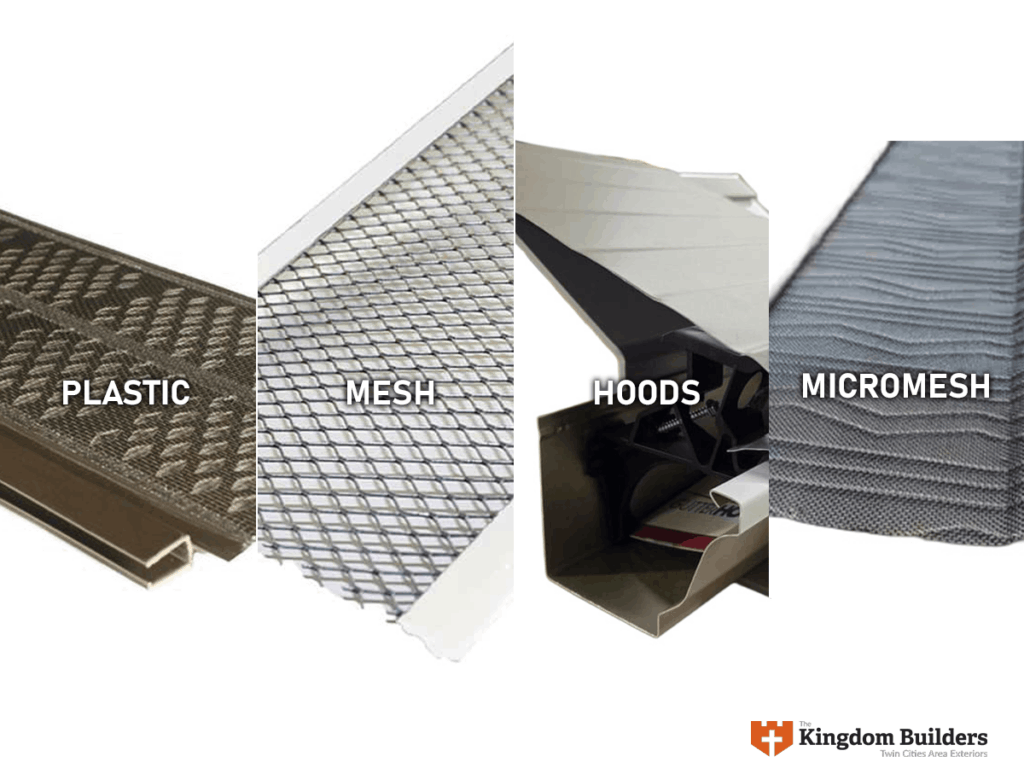
Gutter covers are designed to help prevent debris from clogging the flow of your gutters. Maybe you recently got new gutters or are trying to find a solution to prevent clogs. This is a great spot to start!
We will cover the main types of gutter covers and give you our preferred cover recommendation.
We asked our gutter guys what options are available to homeowners this year and the pros/cons of each option.
Gutter Hood/Gutter Helmet

Gutter hoods (also called “gutter helmets”) look like a hard shell that overhangs the gutter. The design is intended to wick the water back into the gutter, bringing the water more than 90 degrees around from the top of the shingles into the gutter trough. It’s designed to provide a contiguous visual aesthetic. These hoods come in several varieties.
Our professional opinion? We don’t like them very much. It’s easy for things to get stuck between the gap in the hood and the gutter. Since the system relies on surface tension to wick the water back into the gutter, any amount of water over a drizzle tends to flood over the top of the hood.
Pros
- Available in a variety of colors
- Looks nice on the home
Cons
- Dust, algae, oil, and lichen can interrupt surface tension, causing drips
- Debris from the roof can follow the water around the edge and get into the gutter
- Heavy rains can break the surface tension and flood over the gutter
- A major source of ice dams in winter
- Looks bulky
- Expensive
- Hard to install
- May damage shingles
- Needs a clean surface for optimal water tension
- Gutters will need to be cleaned out after years of service
Store Bought Plastic Gutter Covers

Home improvement stores like Home Depot and Lowe’s will often sell plastic or vinyl gutter covers in-store. These are usually around $2 for a 3-foot section (so it’s quite inexpensive compared to other options). To install, they usually clip into the front lip of the gutter.
In our opinion, these DIY, store-bought solutions do not keep up well with water flowing into the gutter, and can even allow smaller debris and objects to flow through the screen (thus defeating the purpose of a gutter cover!)
Pros
- Cheap
- Easy to install
- Blocks larger debris
Cons
- Short life span – becomes brittle over time
- Made from cheap plastic
- Smaller debris gets stuck in the grids, plugging the gutter covers
- Sunshine can warp the material, allowing debris to get trapped in certain areas
- Covers will often collapse into the gutter
Standard Mesh Screens (Larger Grid)

Standard mesh screens are also available through home improvement stores, but tend to be more effective at catching water and filtering debris than their plastic counterpart.
This one does a little better than the plastic gutter covers at catching water, but the screen still allows a lot of debris to get into your gutter.
Pros
- Sturdy metal material
- Filters medium to large-sized debris
- Low cost
- Longer life span
Cons
- Smaller debris gets caught in the screen grid
- Needles and “helicopter” seeds stick up in the mesh and plug the screen
- Shingle granules can build up in gutters
- Frequent maintenance is required to clear out the helicopters and needles
Micromesh Gutter Cover (Leaf Blaster Pros)

This is our recommended gutter cover option. They keep out roof granules, pine needles, and maple seeds…you’ll never have a clogged gutter. They can handle a lot more water.
Pros
- Micro screen gives maximum gutter protection
- Grooves in the micro mesh help debris blow off in the wind
- Long life span
- Best for keeping gutters clean
- Made from aluminum
- Best Cost Option
Cons
- Certain debris may settle on the surface. Minimal maintenance may be required – there is a brush available to brush off your gutters from the ground if needed.
Summary
Selecting the right gutter cover depends on your budget and how much maintenance you’re willing to perform. While Gutter Hoods offer a sleek look, they often struggle with surface tension during heavy rain and can be prone to ice dams. Plastic and standard mesh covers provide a low-cost DIY entry point, but they frequently fall short by letting in smaller debris or warping over time under the sun.
The Bottom Line
For homeowners who want a permanent solution, Micromesh Gutter Covers (like Leaf Blaster Pros) are our professional recommendation for 2026.
By combining durable aluminum construction with a fine mesh that blocks everything from pine needles to shingle granules, they offer the best balance of water flow and debris protection. While no system is 100% maintenance-free, micromesh keeps you off the ladder longer than any other option on the market.

Josh Clark
Josh Clark is a Project Manager for The Kingdom Builders. He has over a decade of experience in the roofing industry, overseeing crews, scheduling projects, and doing marketing efforts.


